ekranoplan.org
ground effect · caspian sea
h/b 1.50 — out of ground effect descent begins

aircraft country.

every conventional wing lives up here — free to climb, free to bank, free to turn. nothing on this page can reach it.

descend.

h/b 1.18
h/b 1.08
h/b 1.00 — in ground effect the surface begins to answer

h/b — height above the surface, divided by wingspan. the one dimensionless number an ekranoplan lives by.

below one wingspan of height, the ground starts to screen the wing's downwash. экран (ekran) is russian for screen. ekranoplan: a glider screened by the ground.

at this boundary the induced-drag penalty has fallen 0.4%. the instrument is not wrong — it is boring. the interesting sky is lower.

a conventional aircraft visits this band only at takeoff and landing. the ekranoplan never leaves it: above ground effect its wing is too small to fly, and in a bank the lowered wingtip meets the sea.

h/b 0.65
h/b 0.56
h/b 0.50 — ge boundary the textbooks' edge of “significant” effect

the textbooks call this the edge of significant ground effect. the curve disagrees: nearly everything happens in the last tenth of a span.

three aircraft were built to live down there, by rostislav alexeyev's central hydrofoil design bureau in gorky — a hydrofoil yard that taught a ship to fly, not a plane to swim.

fig. 1 — induced drag factor φin ground effect ÷ out
0 0.5 1.0 φ free air 0 0.10 0.25 0.50 1.00 1.50 h/b 0.50 → −1.5% (“significant”) 0.10 → −28% 0.02 → −91% φ = (16 h/b)² / (1 + (16 h/b)²) after wieselsberger
induced drag factor, in ground effect over out. nothing happens for most of the descent — then everything happens. ekranoplans cruise on the steep left wall of this curve.
fig. 2 — km · korabl maket · “ship prototype”elevation & section
0 m 92 m span 37.8 m
length
92 m
span
37.8 m
mass, max
544 t
engines
10 × vd-7
first flight
oct 1966
end
sank 1980

eight booster turbojets blew air under the wing for takeoff; two more on the fin cruised it at ~500 km/h. the cia's satellite interpreters found it at kaspiysk in 1967 and named it the caspian sea monster — the nickname outlived the program. at 544 tonnes it was the largest flying machine of its era, and the largest ekranoplan ever.

fig. 3 — a-90 orlyonok · “eaglet”elevation & section
0 m 58 m span 31.5 m
length
58 m
span
31.5 m
mass, max
~140 t
engines
2 × nk-8 + nk-12
first flight
1972
built
~5

the transport — the only ekranoplan to serve in numbers, hauling naval infantry at ~400 km/h. the nk-12 on its fin is the tu-95's engine; the nose jets existed only to blow air under the wing until it was flying.

fig. 4 — md-160 · lun · “harrier”elevation & section
0 m 73.8 m span 44 m
length
73.8 m
span
44 m
mass, max
~380 t
engines
8 × nk-87
in service
1987
armament
6 × p-270 moskit

the missile ship — six supersonic moskit tubes on the spine, launched on the run at 550 km/h, under the radar horizon and above the wave crests. it survives: towed down the caspian coast in 2020 and beached at derbent, awaiting a museum.
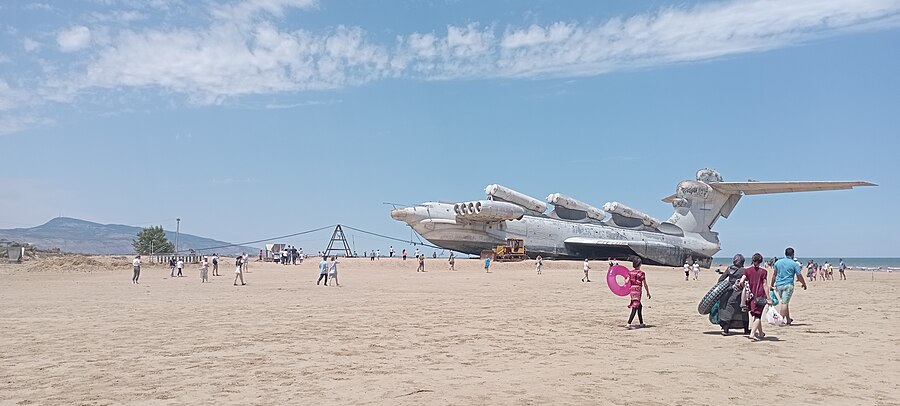
fig. 5 — flight loggorky · caspian sea · derbent
1935finlandkaario's aerosledge no. 8 rides ground effect — the first wing-in-ground craft
1961ussrsm-1 flies at gorky; alexeyev at the controls
1966ussrkm flies on the caspian. 544 tonnes, ten engines
1967usaa reconnaissance satellite finds it at kaspiysk. the analysts call it the caspian sea monster
1972ussrorlyonok prototype flies
1980ussralexeyev dies. km sinks in a landing accident. the same year
1987ussrlun enters service with the caspian flotilla
2020russialun towed to derbent and beached. awaiting a museum
fig. 6 — the machine, beachedcaspian shore · 2022
The Lun ekranoplan MD-160 beached on a pebble shore: long dark hull, eight turbofans forward, missile containers along the spine, tall fin at the stern.
the only photograph on this page. after the drawings — the machine itself, out of the water since 2020. photo: mariya7573, wikimedia commons, cc by-sa 4.0.
h/b 0.05 — cruise altitude alt 1.9 m

down here the wing's downwash cannot escape; the sea answers with lift. this is the ekranoplan's whole sky — a band thinner than the aircraft is long.

touch down.

the caspian sea 0 m
colophon figures as commonly reported; sources disagree on the km, which was rebuilt repeatedly between 1966 and 1980 (length 92–106 m, span 32–40 m). the drag factor follows wieselsberger's classical approximation, φ = (16 h/b)² / (1 + (16 h/b)²), which overstates the gain at very low h/b — treat the curve as schematic and the direction as fact. drawings schematic; lengths and spans to scale. h/b is computed from your scroll position against the km's 37.8 m span. photograph in fig. 6 by mariya7573 via wikimedia commons, cc by-sa 4.0, shown in grayscale. compiled 2026 — pborenstein, with account:zai-individual-coding-plan/GLM-5.3 (zcode): identity read from session logs by acnehuatl, not self-reported.